

Severe-Duty vs. Normal-Duty Diesel Truck Maintenance
Your owner's manual gives one interval for every driver, but a truck that tows heavy four days a week degrades its oil and clogs its filters at roughly twice the rate of one doing light commuting. The right schedule depends on how you actually drive, not what the book assumes. Pick your profile below — heavy hauler, daily driver, or occasional operator — and follow that interval instead.
Quick answer: the right maintenance interval depends on how you use your truck, not what the owner's manual says. Heavy haulers who tow near capacity or idle for extended periods need oil, fuel, and air filter changes roughly twice as often as daily drivers. Occasional operators need shorter time-based intervals even at low mileage, because oil and filters degrade sitting still, too.
Your owner's manual gives you one number. It doesn't know you pull a 14,000-lb fifth wheel every weekend. It doesn't know you idle for an hour every morning in a construction yard, or that your truck sits in the driveway from October to April. The OEM maintenance interval is a baseline built for an average driver who doesn't exist.
Diesel engines are built to last 300,000 miles or more, but that longevity depends entirely on whether the oil, fuel, and air systems stay clean under the actual load they carry. Running the same interval for a truck that hauls heavy four days a week and one doing light daily commuting isn't conservative — it's neglectful of the harder-working machine.

WHAT SEVERE-DUTY ACTUALLY MEANS
Most truck owners assume severe-duty is for commercial fleets or off-road rigs. In reality, a significant share of diesel pickups on the road qualify for severe-duty intervals based on how they're used, even if their owners are following normal-duty schedules. OEMs define severe-duty as any combination of:
- Frequent towing or hauling at or near the truck's rated capacity
- Extended idling (construction sites, cold-weather warm-up, remote work)
- Frequent short trips under 10 miles where the engine never fully reaches operating temperature
- Dusty or dirty operating environments (farms, job sites, unpaved roads)
- Extreme temperatures, hot or cold
If your truck regularly hits two or more of these conditions, you're running a severe-duty machine — and the OEM normal-duty interval isn't designed for you. Under severe-duty conditions, oil accumulates soot and moisture faster, fuel filters face more particulate contamination, and air filters can clog in a fraction of the time they would on a clean highway commute.
The Three Maintenance Profiles: Find Yours
Before looking at specific intervals, identify which profile matches how you use your truck. Most owners fall clearly into one category.
The Heavy Hauler
You pull trailers regularly, haul payloads near capacity, work the truck on job sites, or log 15,000+ miles per year under load.
Signs: tow more than 8,000 lbs more than twice a month, idle for extended periods at work sites, or the truck doubles as a work vehicle with regular payload.
The Daily Driver
You run the truck every day for commuting, light towing, or work use without heavy loads — roughly 10,000 to 15,000 miles per year.
Signs: commuting or light-duty hauling, occasional but not regular towing at capacity, no frequent extended idling.
The Occasional Operator
Your truck comes out on weekends, tows a camper in summer, or sits for weeks at a time — often just 3,000 to 6,000 miles per year.
Signs: sits for weeks between uses, seasonal use, or it's a second vehicle that sees irregular use.
Key takeaway: low mileage doesn't mean low maintenance. Oil and filters degrade over time even when a truck isn't being driven. An occasional operator who skips annual service because "I barely put miles on it" is making a costly mistake.
What's the Right Maintenance Interval for Each Profile?
These recommendations are built around real-world use, not OEM averages, and lean toward changing sooner rather than later — the cost of a missed interval always exceeds the cost of an extra filter.
| Service Item | Heavy Hauler | Daily Driver | Occasional Operator |
|---|---|---|---|
| Oil + Oil Filter | Every 5,000 mi or 3 months | Every 7,500 mi or 6 months | Every 5,000 mi or 9 months |
| Fuel Filter | Every 10,000–12,000 mi | Every 15,000 mi | Every 15,000 mi or annually |
| Air Filter | Every 10,000–12,000 mi | Every 12,000–15,000 mi | Every 15,000 mi or annually |
| Cabin Air Filter | Every 12,000 mi or 6 months | Every 15,000–20,000 mi | Annually |
| CCV Filter | Every 50,000 mi | Every 50,000–60,000 mi | Every 60,000 mi or 3 years |
| Transmission Fluid + Filter | Every 30,000 mi | Every 30,000–45,000 mi | Every 45,000 mi or 3 years |
| Brake Inspection | Every 10,000 mi | Every 15,000 mi | Seasonally (spring & fall) |
Oil, Fuel & Air: The Details Behind Each Interval
Oil and Oil Filter: The Non-Negotiable
Oil is the single most important thing you can stay on top of. For a heavy hauler, the 5,000-mile interval isn't conservative — it's appropriate. High-load, high-heat operation accelerates oxidation and soot contamination in diesel oil. Pushing to 10,000 miles on a truck that tows regularly is how you end up with bearing wear you won't see until it's too late.
For daily drivers and occasional operators, Doc's Diesel oil filters are rated to the OEM-recommended interval of 10,000 to 15,000 miles, but most owners prefer a 7,500-mile cycle for peace of mind — a reasonable call.
Fuel Filter: The One Most Owners Skip Too Long
Diesel fuel quality varies widely. Water contamination, microbial growth, and particulate buildup all accelerate fuel filter degradation. The standard recommendation is every 15,000 miles, but heavy haulers running higher fuel volume should move that up to 10,000–12,000 miles. A clogged fuel filter starves your injectors and forces the lift pump to work harder, which shortens its life.

AIR FILTER: ADJUST FOR YOUR ENVIRONMENT
The 12,000 to 15,000-mile recommendation assumes reasonably clean air. If you work on farms, construction sites, or unpaved roads, cut that interval in half. A restricted air filter robs power and forces the turbo to compensate, which increases exhaust temperatures and long-term wear.
Inspect the filter visually every time you do an oil change — if it's visibly gray or brown, swap it regardless of mileage. Browse engine air filters and cabin air filters by platform.
CCV Filter: The Most Overlooked Item on This List
The crankcase ventilation filter catches oil mist and combustion gases before they recirculate back into the intake. On Cummins engines especially, a neglected CCV filter can cause oil to back up into the intake, coating the intercooler and throttle body with a film that reduces airflow and combustion efficiency. The 50,000 to 60,000-mile interval holds for most use cases, but heavy haulers running high idle hours should check it closer to 50,000. Doc's Diesel carries the 6.7L Cummins CCV Filter as a standalone item, making it easy to add to any service interval.
Brakes: Load Changes Everything
A truck that tows 12,000 lbs generates significantly more brake heat and wear than one doing light highway miles. Brake pad life on a heavy-towing truck can be half what it is on a daily driver. For heavy haulers, a visual brake inspection every 10,000 miles is the right call; for daily drivers, every 15,000 miles is sufficient. Brake fluid also absorbs moisture over time and should be checked regardless of mileage — wet fluid boils at lower temperatures, which is exactly the wrong characteristic when descending a grade with a loaded trailer.
Should You Bundle Your Service Items?
Changing oil and the oil filter but leaving a 14,000-mile fuel filter in place defeats the purpose of the oil change — you've addressed one contamination source while leaving another in place. The most efficient approach is to group service items by interval tier:
- Every oil change: oil filter, inspect air filter, check fuel filter condition
- Every second oil change (or at fuel filter interval): fuel filter, cabin air filter, air filter if not already swapped
- Annually or at transmission interval: transmission fluid and filter, CCV filter inspection, brake inspection
This is exactly why all-in-one diesel maintenance kits exist. Rather than sourcing filters individually and hoping you have everything on hand, a platform-specific kit gives you every filter you need for a complete service in one order. For Cummins, Powerstroke, and Duramax owners, Doc's Diesel builds kits by truck platform and year, so you're not guessing at fitment.
The math is straightforward. A complete maintenance kit costs less than a single hour of labor at a shop. Doing the service yourself with the right parts, on the right schedule, is the most cost-effective way to protect an engine that costs $15,000 or more to replace.
Shop Maintenance Kits by Platform
Every filter you need for a complete service, matched and sourced to spec. Add straight to cart below, or use the vehicle selector for your exact year.

6.7L Cummins Filter Maintenance Kit
Fits 2019-2024 | $149.99
Every filter your 6.7L Cummins needs for a complete service interval, bundled into one order.
What's Included
- Fuel filter, oil filter, air filter, cabin filter — matched and sourced to spec
- One order, complete service — no guessing at fitment
Fits Ram 2500/3500 · 6.7L Cummins · 2019-2024
30-Day Money-Back Guarantee

6.7L Power Stroke Filter Combo Kit
Fits 2020-2025 | $133.99
Every filter your 6.7L Power Stroke needs for a complete service interval, bundled into one order.
What's Included
- Fuel filter, oil filter, air filter, cabin filter — matched and sourced to spec
- One order, complete service — no guessing at fitment
Fits Ford F-250/F-350/F-450/F-550 · 6.7L Power Stroke · 2020-2025
30-Day Money-Back Guarantee

6.6L Duramax Filter Maintenance Kit
Fits 2019-2026 | $91.99
Every filter your L5P Duramax needs for a complete service interval, bundled into one order.
What's Included
- Fuel filter, oil filter, air filter, cabin filter — matched and sourced to spec
- One order, complete service — no guessing at fitment
Fits Silverado/Sierra 2500HD/3500HD · L5P 6.6L Duramax · 2019-2026
30-Day Money-Back Guarantee
One More Variable: Seasonal Conditions
Use-case profile is the primary driver of your maintenance schedule, but season adds a layer worth accounting for, especially for trucks in cold-weather climates.
Fall and Winter Preparation
- Oil viscosity: confirm your oil weight is appropriate for cold starts — a 5W-40 or 10W-30 is typically better suited for cold climates than a heavier grade that thickens at low temperatures
- Fuel additives: diesel fuel can gel in cold temperatures; adding a cold-weather fuel treatment before the first hard freeze prevents wax crystal formation that can clog fuel filters and injectors
- Battery health: cold temperatures reduce battery capacity — a weak battery that starts fine in September may fail in January
- Coolant concentration: confirm antifreeze protection is rated for your region's lowest expected temperature; diluted coolant that freezes can crack an engine block
Spring Service Reset
Spring is the natural time for a maintenance reset after winter wear. Salt, moisture, and cold starts all take a toll. A spring service should include a brake inspection (salt accelerates rotor and caliper corrosion), an air filter check, and a fuel system inspection if you ran through winter without a treatment. See the fall diesel maintenance guide on The Daily Rev for a step-by-step seasonal checklist.
Frequently Asked Questions
Any combination of frequent towing near rated capacity, extended idling, frequent short trips under 10 miles, dusty or dirty environments, or extreme temperatures. If your truck regularly hits two or more of these, you're running a severe-duty machine and should follow the heavy hauler intervals, not the OEM baseline.
Heavy haulers should change oil every 5,000 miles or 3 months, versus 7,500 miles or 6 months for daily drivers. High-load, high-heat operation accelerates oxidation and soot contamination, so pushing a towing truck to 10,000-mile intervals risks bearing wear that isn't visible until it's already done damage.
No. Oil and filters degrade over time even when a truck isn't being driven. Occasional operators putting on just 3,000-6,000 miles a year still need service every 5,000 miles or 9 months, whichever comes first — skipping annual service because mileage is low is a common and costly mistake.
Daily drivers and occasional operators should change the fuel filter every 15,000 miles (or annually for occasional operators). Heavy haulers running higher fuel volume should move that up to every 10,000-12,000 miles.
The CCV (crankcase ventilation) filter. It catches oil mist and combustion gases before they recirculate into the intake. On Cummins engines especially, a neglected CCV filter can let oil back up into the intake, coating the intercooler and throttle body and reducing airflow and combustion efficiency.
Yes. Changing the oil filter while leaving an overdue fuel filter in place defeats the purpose — you've addressed one contamination source while leaving another. A platform-specific maintenance kit bundles every filter for a complete service into one order, and typically costs less than a single hour of shop labor.
SHOP MAINTENANCE KITS & FILTERS


Doc's Diesel
Ram 6.7L Cummins 10W-30 Full Synthetic Oil + Filter Maintenance Kit 2019-2024
Replaces 68436631AA, 68157291AA, 05083285AA, 68406048AA


Doc's Diesel
Ram 6.7L Cummins 5W-40 Full Synthetic Oil + Filter Maintenance Kit 2019-2024
Replaces 68436631AA, 68157291AA, 05083285AA, 53034051AB


Doc's Diesel
Ram 6.7L Cummins 15W-40 Full Synthetic Oil + Filter Maintenance Kit 2013-2018
Replaces 68197867AA, 68157291AA, 05083285AA, 53034051AB


Doc's Diesel
Chevrolet/GMC 6.6L Duramax 15W-40 Full Synthetic Oil + Filter Maintenance Kit 2019-2025
Replaces TP1015, PF26, 84554703, CF185


Doc's Diesel
Ford 6.7L Powerstroke 5W-40 Full Synthetic Oil + Filter Maintenance Kit 2020-2026
Replaces FD4625, FL2051, FA2031, FP79


Doc's Diesel
Ram 6.7L Cummins 5W-40 Full Synthetic Oil + Filter Maintenance Kit 2013-2018
Replaces 68197867AA, 68157291AA, 05083285AA, 53034051AB


Doc's Diesel
Ford 6.7L Powerstroke 5W-40 Full Synthetic Oil + Filter Maintenance Kit 2011-2016
Replaces FD4615, FL2051, FA1902


Doc's Diesel
Ford 6.7L Powerstroke 10W-30 Full Synthetic Oil + Filter Maintenance Kit 2020-2026
Replaces FD4625, FL2051, FA2031, FP79


Doc's Diesel
Ford 6.7L Powerstroke 5W-40 Full Synthetic Oil + Filter Maintenance Kit 2017-2019
Replaces FD4625, FL2051, FA1927, FP79


Doc's Diesel
Chevrolet/GMC 6.6L Duramax 15W-40 Full Synthetic Oil + Filter Maintenance Kit 2017-2019
Replaces TP1015, A3231C, 29539579, 23281440


OVER 500,000+ HAPPY CUSTOMERS
“Doc's actually has some dang good filters, heck even their sticker pack actually comes with usable stickers that ain’t so small nobody notices them. Ordered fuel filters for my 2016 6.7 Cummins and Doc's sent updates for every step of the way, and they shipped to my house within 3 days. Cheaper than the parts store, noticeable quality, and shipped out the same day I ordered em. So overall nothing bad to say and will definitely be upgrading my fleet to all docs filters.”
TB Cattle Co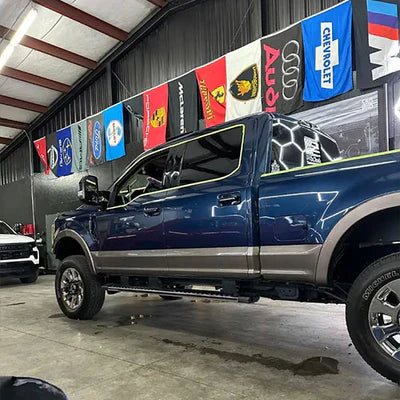
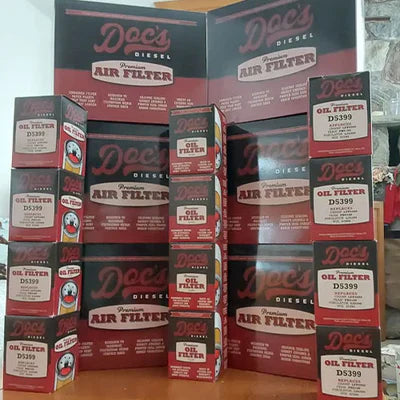
“I did my oil change with y'all's 10 W 30 full synthetic with the hot shot secret with fuel filters and immediately knew the difference and sounded better. Ran better. I was getting 20 miles to the gallon now I'm upwards of 24. Absolutely getting this for the rest of its life and my next truck's life.”
Brandon H.“I use the filters and oil kits to service my fleet of trucks (4). I own a landscaping company and we are hard on our trucks, and it's nice to have a convenient way to buy the correct amount of oil and all filters in one place.”
Kameron C.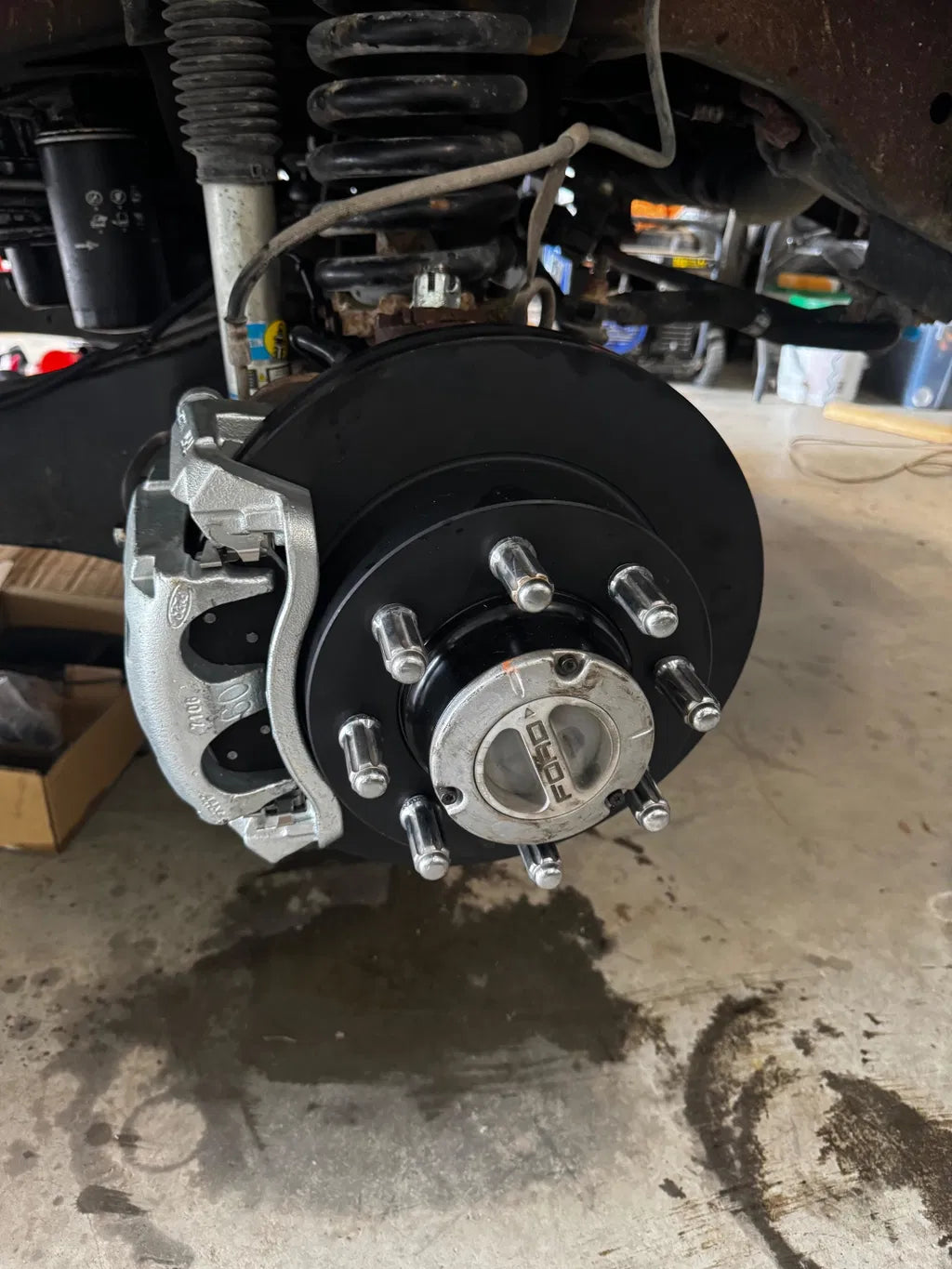
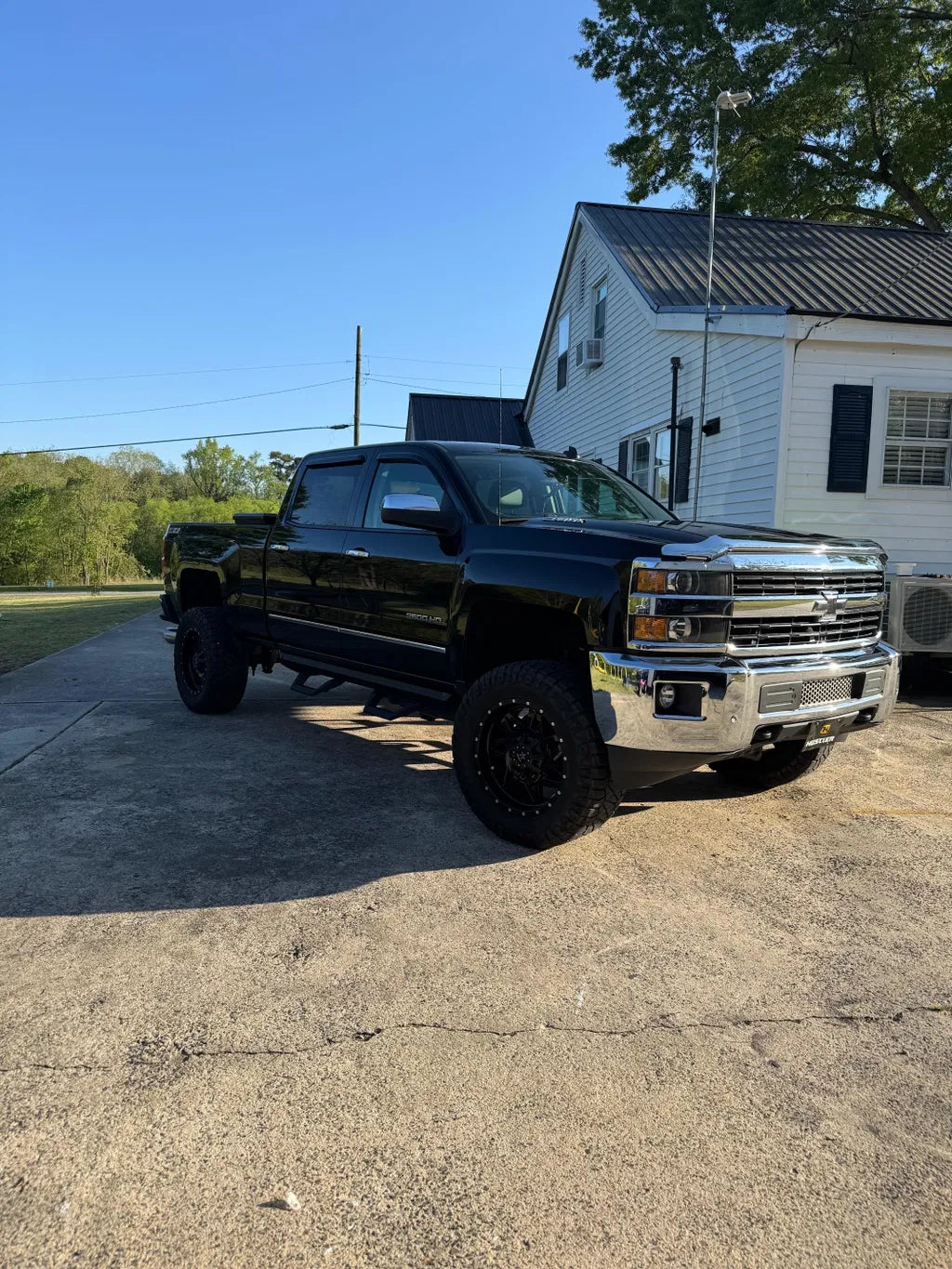
“Easy to order, had a question got a call back very quickly and product was very nice stuff! Definitely will continue ordering my oil changes through docs 👍”
Dakota W.
ENTER YOUR TRUCK. WE'LL FIND YOUR KIT.